Taking Off the Cape: Why Caribbean Women Are Rewriting the ‘Strong Woman’ Narrative on Mental Health
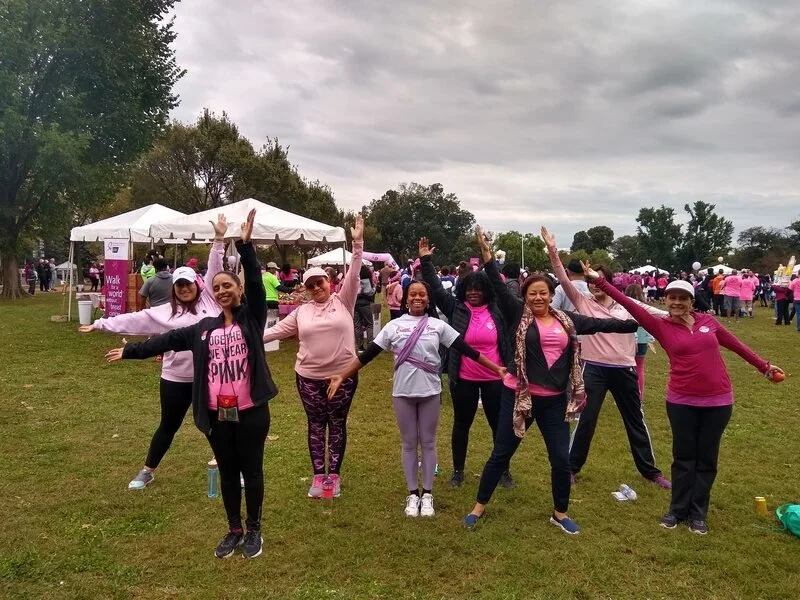
Photo of Kayla Harley at a women’s wellness event
January 19, 2026
written by CCMag
It’s a Thursday evening and you’ve just arrived home from work. You’ve been stuck in bumper to bumper traffic for nearly 2 hours after delivering a presentation that you’ve been working hard on for 3 weeks now. You're still not sure if your boss is happy with it, so your mind races between that and which green pepper is best to pick up from the grocery store where you stopped just before making it home. Finally, you walk through the door and wobble in with grocery bags still in hand as you kick off your shoes. You leave your jacket on because even that seems like work.
It has been “a day” to say the least, but that doesn’t stop your energetic loving daughter from rushing to greet you at the door, so she tells you all about her day at school. The “strong-woman” in attempts to rise up in you, listening to her story as you approach your favorite sitting chair. But wait - you can’t actually sit down now… a sudden surge of pain jolts up the right side of your back.
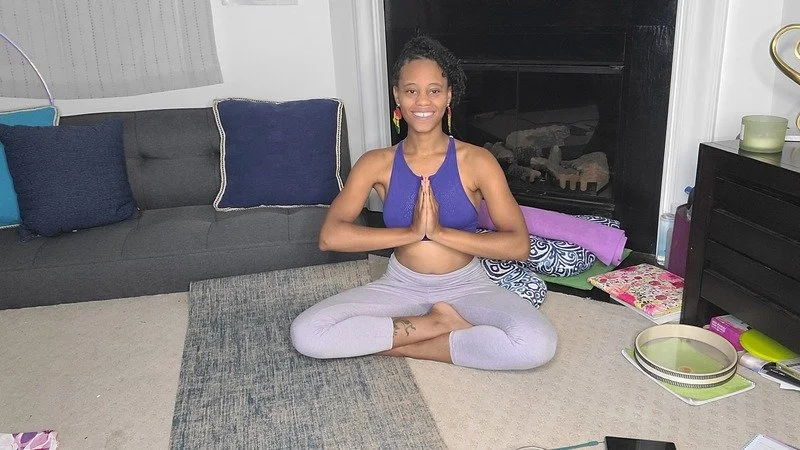
Photo courtesy of Kayla Harley
It’s Sciatica, again. You clench your fist tightly and hold your breath for 30 seconds until it passes. No, not this again I can’t be tired yet!! The kids are depending on me! —you think quietly to yourself. A feeling of guilt rushes over you as you exhale. Slowly you start to motion yourself forward. You gasp for air tensing your whole body—shoulders hiked up to the ears, your face grimacing tightly in discomfort. Again, waiting for this terrible feeling to pass….1….2….3 minutes later.
Your eyes start to fill with water but you wouldn’t let even a single tear drop fall— not because of the makeup but because you don’t want your kids to see that —Mommy doesn’t feel well— again. They need a strong mother, just like “Mima” (Grandma). Someone who can handle whatever it is that comes, without flinching.
Photo courtesy of Kayla Harley
This is common rhetoric for Women brought up in traditional Caribbean households where ‘being tired’ was an understatement, self-sacrificial love was non-negotiable, pain was often internalized and giving from an empty cup was celebrated. In fact, studies from CARPHA [Caribbean Public Health Agency] indicate that the Caribbean has a long-standing history of serious mental health disparities, particularly in Black and Asia/Indian populations: due to lack of education in low-income communities, substance abuse, limited resources, and/or cultural resistance to the idea of external support. More recent studies have revealed that Black/African Diasporic are officially among the most underdiagnosed populations living with mental health conditions that range from Manic Depression, Bi-polorism, Multiple Personality Disorder, among many others.
According to “Healing Traditions in the Caribbean" by Patsy Sutherland mental health is as a spiritual matter, one that can be cured through prayer, ritual, deflected by humor, or not dealt with at all. This scholarly reference is a great book that breaks down cultural traditions, spiritual beliefs and the way in which healing practices have manifested to support us –specifically as Caribbean people.
While our parents and grandparents would agree with this notion – that only “God could heal de mind”-- times have certainly changed proving that we need more intentional focus, care and treatment as it pertains to our mental health and those left without guidance, support or resources while facing real mental distress, dysfunction and disorders become more susceptible to self-harm, the harm of others or worse–suicide.
You see, the pressures of life look different for the Millennial Indo-Caribbean woman she is less concerned with keeping up an image for her family and loved ones and no longer accepting cultural tropes like the “Shero”, “The Brickhouse” or the forever “Strong-Woman”. She is too busy resisting temptation to compare herself to the next person on social media, keeping herself integral and grounded in this very fast paced tech driven society and involuntarily uprooting issues, trauma and generational curses that were passed down to her through the family line.
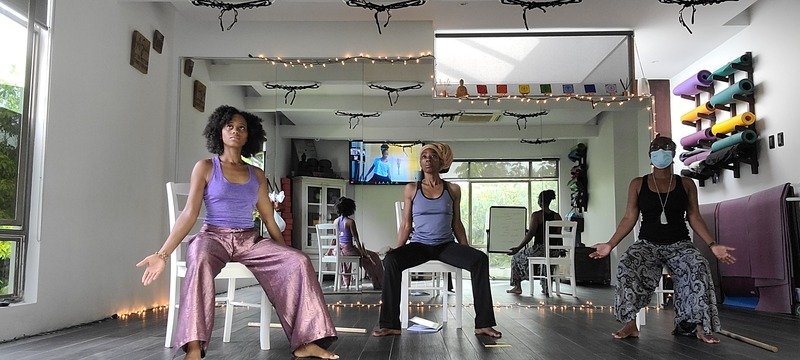
Photo courtesy of Kayla Harley
We are women with agency. We are showing up and “doing the work” because we realize that we have no desire to replicate unhealthy coping mechanisms and self-sabotaging behaviors.
No.
We are choosing to navigate life with more balance, compassion, joy and freedom. Julien Alfred, Olympic Gold Medalist from St. Lucian could relate to this. She opened up earlier this year about her bouts with depression and anxiety feeling like she was carrying her country on her shoulders and did not want to let them down, she claims she nearly quit athletics just before Paris in 2024.
It wasn’t until she started seeing a therapist that she was able to break through those dark times and become the champion she is today. As a bold advocate for mental health, Alfred says:
"I want to encourage everyone, especially in our Caribbean community, to take their mental health seriously. Seeking counseling is not a sign of weakness, it’s a way of caring for yourself. We must break the stigma around mental health, especially when it comes to asking for help."
Alfred is just one among many women who are starting to take that stand.
You are also one of them, simply because you read this article. It means that you’re ready for change…for improvement. To ask for help and to live a more optimal life. You deserve the best. You deserve to live a happy, supported and loving life.
Before you leave —Take a moment to unpack this article for yourself by reflecting on those areas in your life where you’d like to show yourself grace. Start by reflecting on how you feel today.
Write (3 -5) words in your journal or on a notepad that best describe the following areas of your wellbeing. Be honest and non-judgemental:
Physical Health
Emotional Health
Mentally Health
Financial Health
Spiritually Health
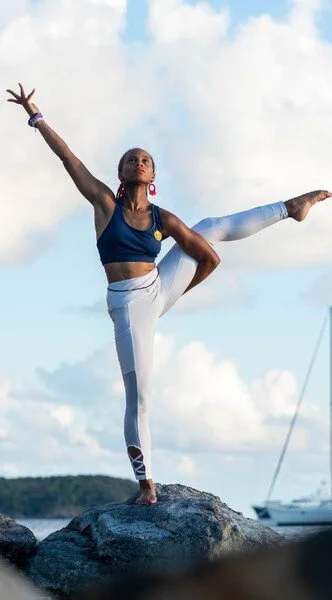
Photo courtesy of Kayla Harley
If you or someone you know is in need of support, we’ve provided a list of BIPOC mental health professionals, holistic practitioners, therapists and online communities of which you can reach out to below.
USA: The Boris L. Henson Foundation
Canada: Brown Gyal Diary Caribbean Wellness Directory
Haiti: Rebati Santa Mentale (Haitian) - Dr. Guerra Nicolas, Black Heritage Support Service
Barbados: Dr. Elizabeth Louis, Phidias Jean-Pierre, LMSW, Shantelle Brewster, LMFT(A)
Grenada: Malakai Brooks, Yoga Therapist
Jamaica: Caribbean Therapeutic & Educational Center, Niketa P. LCSW
Trinidad: The Light Center Akeisha Jones, Reiki Master
Guest Writer: Kayla Harley, Founder of The Beebodi Marketplace is an International Holistic Wellness Practitioner and Certified Optimal Breathologist, GYROKINESIS® Instructor and Full Spectrum Doula. Inspired by the aesthetics of dance, martial arts and other forms of Indigenous healing practices, Kayla offers somatic therapy to help persons release toxic energy, unhealthy emotions, end cycles and break free from generational trauma. She has touched many lives through her sacred practice and is recognized as a TEDx Speaker and a 2023 Joy Award Recipient as presented by Taraji P. Henson of The Boris L. Henson Foundation for her work in Integrative Health in Black and Brown communities. Kayla can be found hosting a wellness retreat, workshop, event or online class series centered around Radical Self-Care, Active Rest and Empathy.